
Improving my writing craft through classroom learning
Gaining energy and inspiration at a writing festival

I’d like to address a part of my writer’s life other than drafting and editing my novels—developing my craft to improve my storytelling skills and renew my energy.
In my last article, I discussed choosing to respond to my life circumstances that affected my writing time; as a quick update, my balance of life and writing has been restored. The ‘crisis’ is over and I’m a happy creator again. Thanks to those who reached out with concern, reassurance, and empathy.
For 2026, I resolved to attend at least one in-person conference or workshop to fulfill these goals:
learn new skills and tools for creative purposes, which could include marketing and sales tools
connect with and share ideas and inspiration with other writers who are also on independent creative or early publishing journeys.
I already wrote about the Toronto Independent Author Conference, and I was so jazzed by that experience, I leapt at the chance to attend another conference in Toronto (only an hour’s drive from my home). In early June, I spent a day and half at the MOTIVE Crime and Mystery Festival, a genre-focused programme of readings, conversations, and masterclasses, presented by the Toronto International Festival of Authors (TIFA).
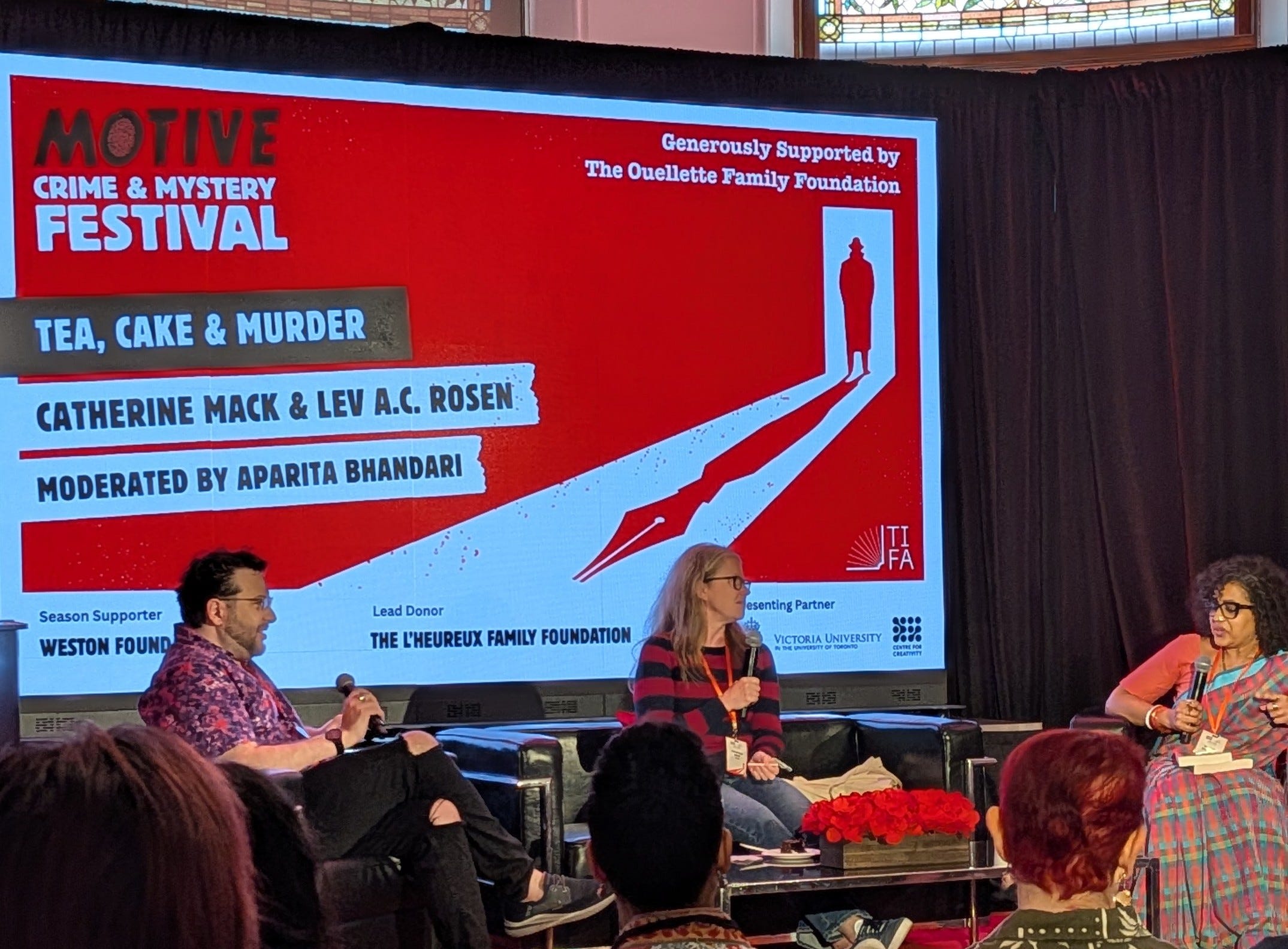
I signed up for three 90-minute Masterclasses because I wanted to develop my writing skills in areas such as plotting, character, and point of view. Each class was taught by an established, multi-published, mystery-thriller author who has been in the publishing trenches for years and is writing novels full time. In short, they had the credibility and experience I wanted to learn from. If you’re thinking that just because someone can write a book, doesn’t mean they can teach about writing, it’s a valid concern. I’m happy to report that all of my instructors were excellent and provided solid theory and practical applications and examples.
In ‘Building Characters,’ French-Swedish author Johana Gustawsson gave students practical questions to ask when discovering our characters and presented a writing exercise that we could then read to the class and receive her feedback (I did read mine!).
In ‘The Skeleton of the Crime Novel,’ Iceland’s Lilja Sigurðardóttir brought her quirky sense of humour to a concise plotting class and rewarded our attention with Icelandic licorice candy.
In ‘Using Multiple Points of View in Your Story,’ Canadian Robyn Harding turned on some amazing lightbulbs for me on using more than one point-of-view character. I’m planning to use this technique in a future crime novel I’m cooking up—a technique I’d been reluctant to embrace because I didn’t understand how to use it effectively.
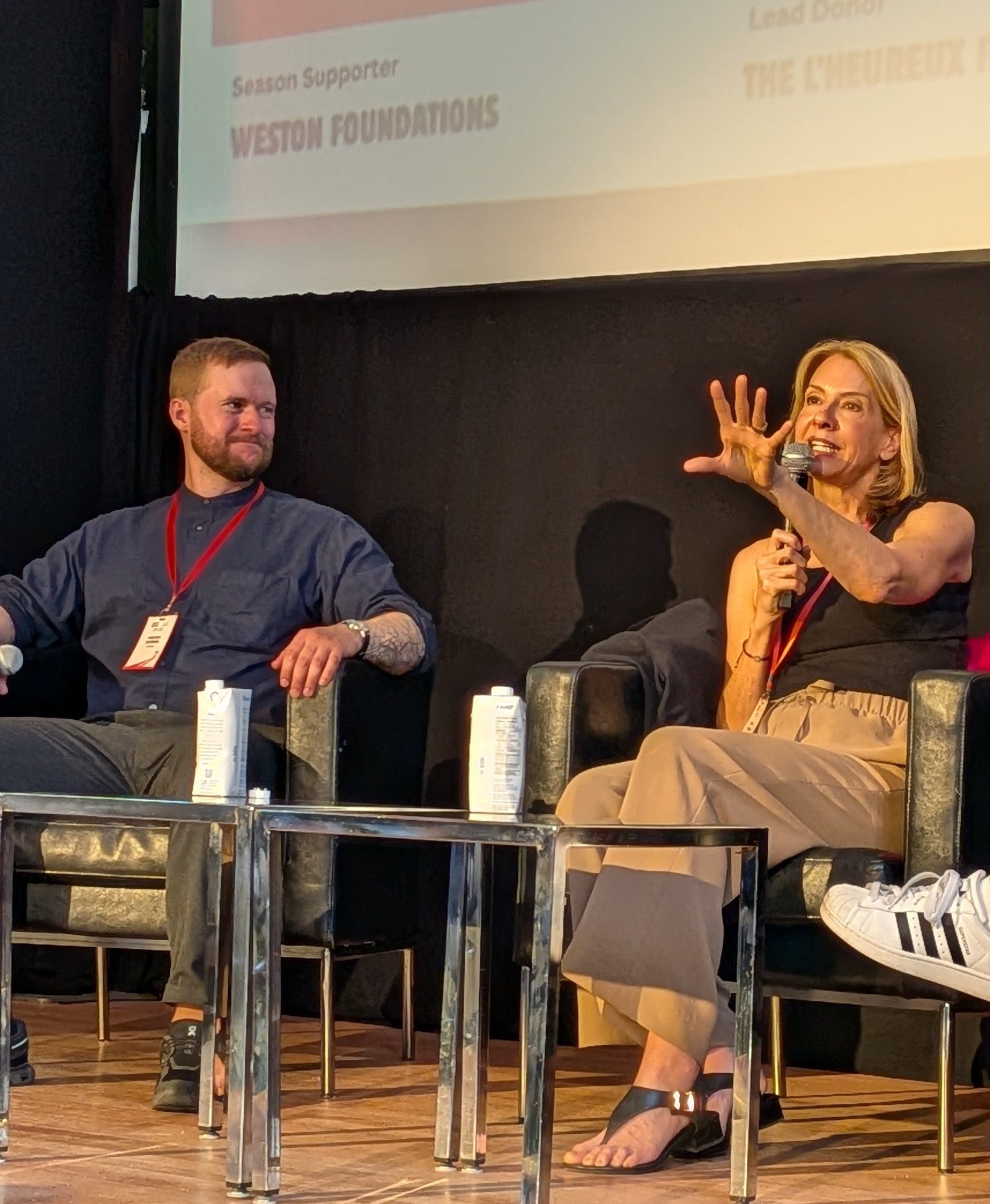
I also had a day pass that included conversations and panel discussions with authors, with which I filled in time between masterclasses. I was skeptical of learning as much from an author promoting their newest release in a Q&A interview, but was humbled to discover I made almost as many notes about the craft of fiction-writing from these superbly moderated discussions as from the masterclasses. The moderator questions were insightful and the authors were candid about their ideation and storytelling process, punctuated with plenty of wit and humility.
I also enjoyed chatting with many writers in the early stages of their careers who, like me, are balancing non-writing jobs, family, and other hobbies in the pursuit of fiction-publishing dreams. During a couple of panels, I even sat beside a well-established Canadian writer of psychological-thriller, Shari Lapena and we had a wonderful, down-to-earth chat about the ongoing challenges of writing fiction.
In addition to learning new skills about and insights into the writing and publishing process, I was most impressed by realizing that every writer—no matter how many books you’re written and how adored they are—still struggles with procrastination, finding original ideas, learning fresh ways to tell stories, hating their first drafts, and receiving cringe-inducing feedback and editorial changes. But every writer also still feels the joy of discovering new stories to tell, the passion and dedication in sitting at the desk and writing one word at a time, and the thrill of releasing stories into the world and connecting with precious readers.
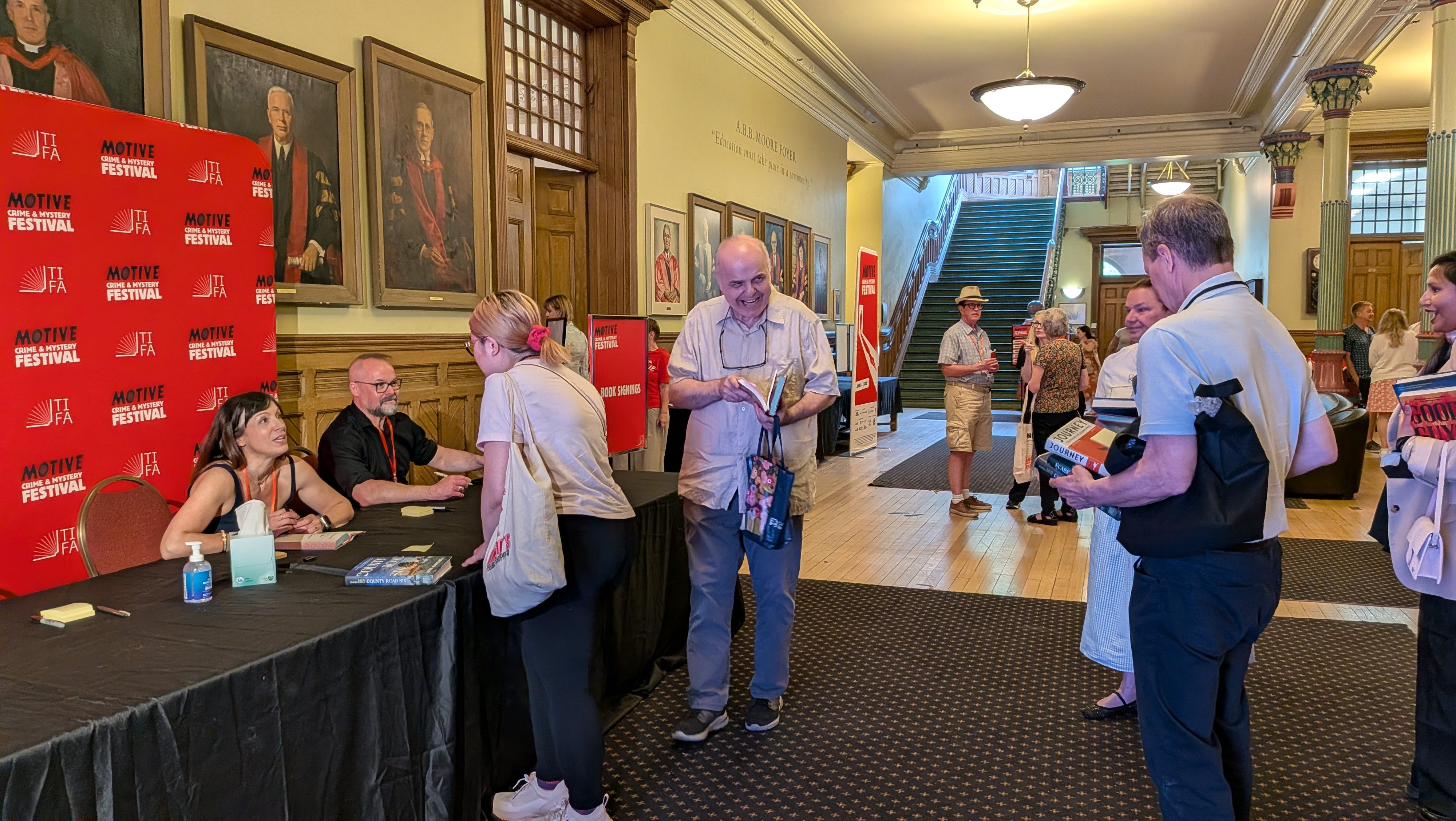
I left feeling highly energized and eager to get back to my writing desk. As with past learning, I sensed the impulse to attend an endless series of workshops and conferences in search of the next educational hit of adrenaline. Fortunately, I understand the value of putting the learning into practice and getting down to the business of writing. I still look forward to another conference next year, but I also want to get my stories into readers hands (or ears). And that’s the true motive and mystery behind why I write—I want to share my inner worlds and characters, and connect with people eager to receive them.
Thanks again for reading and keep your creative thrills alive in mind, heart, and action.
If you haven’t read The Revived and know someone who might be interested, you can buy it in eBook or paperback here.
If you read it, please help others discover it with a review on Amazon or Goodreads.
Ask me questions or give me feedback on my process and my novel.
You can also follow me on social media for other creative and personal insights:

Sounds like you had a great time in Toronto! I'm glad to hear your life is back in balance and you have time to create again. I'm looking forward to hearing how TSBC is progressing.
Naming the pull toward the next workshop instead of the writing desk is more honest than most conference recaps manage. Did the multiple POV idea survive contact with an actual draft yet, or is it still in the exciting-in-theory stage?